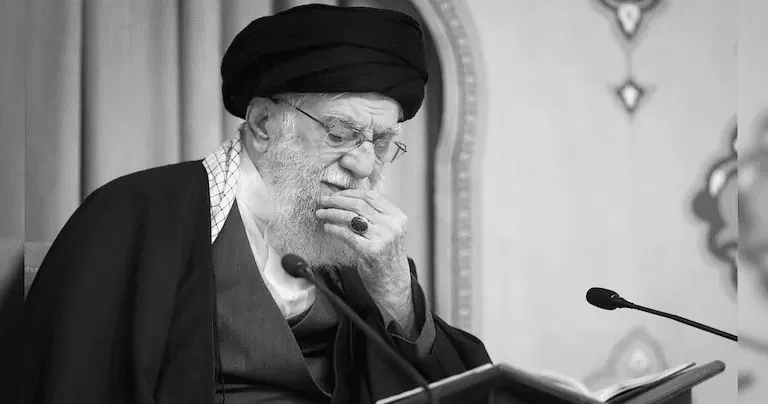

February 28, 2026 — A date that will be etched in history. Iran’s Supreme Leader, Ayatollah Ali Khamenei, was killed in a coordinated military strike by the United States and Israel, sending shockwaves across the globe. The 86-year-old leader who had ruled Iran since 1989 was confirmed dead by Iran’s state media, triggering a wave of reactions ranging from grief and outrage to open celebrations and cautious optimism.
What Happened?
In a joint military operation on February 28, 2026, US and Israeli forces launched targeted strikes on Iran, which resulted in the death of Supreme Leader Ayatollah Ali Khamenei. Israel’s Prime Minister Benjamin Netanyahu announced there were “growing signs” Khamenei had been killed when Israel struck his compound. President Donald Trump confirmed the news on Truth Social, calling Khamenei “one of the most evil people in history” and urging the Iranian people to seize the moment to “take back their Country.”
Reactions from Around the World
United States
President Trump’s reaction was swift and unambiguous. He posted on Truth Social calling Khamenei’s death “the single greatest chance for the Iranian people to take back their Country.” He also issued a stern warning to Iran against retaliation, stating the US would respond with force “that has never been seen before” if Iran struck back. Several US lawmakers praised the action, while others condemned it as illegal.
Russia
Russian President Vladimir Putin offered a starkly different view, condemning the killing as a “cynical murder” carried out in “blatant disregard for all standards of human morality and international law.” Putin extended condolences to Iranian President Masoud Pezeshkian and acknowledged Khamenei’s role in strengthening Russian-Iranian ties.
China
China issued a strong condemnation, calling the assassination a “serious violation of Iran’s sovereignty and security” and a breach of the UN Charter’s core principles. The Chinese Ministry of Foreign Affairs demanded an immediate halt to all military actions in the region.
Europe
European reactions were mixed. The EU’s foreign policy chief Kaja Kallas described the event as “a defining moment in Iran’s history,” noting there was now “an open path to a different Iran.” The French government said Khamenei was responsible for thousands of civilian deaths and that “one can only welcome his disappearance.” Sweden’s foreign minister said the moment could “open a window of opportunities” but warned that “the risk of a spiral of violence in the Middle East remains great.” UK Defence Secretary John Healey bluntly stated that Khamenei’s death “would not evoke mourning.”
Muslim World and Middle East
Iran’s President Masoud Pezeshkian called the assassination “an open declaration of war against Muslims” and described it as “the greatest trial facing the Islamic world today.” Turkish President Erdogan expressed sorrow and sympathies to the Iranian people. Pakistan’s PM Shehbaz Sharif condemned the killing as a violation of international law, stating that heads of state should never be targeted. Hamas called the attack “heinous,” urging Arab and Muslim nations to take urgent action. Houthi leadership also offered condolences, calling it a violation of international norms.
Iran:
Perhaps the most complex reactions came from within Iran itself. Scenes of deep division played out on the streets of Tehran and beyond. While thousands gathered in black, mourning a leader they saw as the pillar of the Islamic Republic, others flooded city squares in celebration — waving pre-revolution Iranian flags, tearing down statues of the Islamic Republic’s founders, and chanting slogans against the regime. Iranians in exile across the world, particularly in Europe and North America, also celebrated publicly.
Reza Pahlavi, the Iranian crown prince in exile and son of the last Shah of Iran, declared that Khamenei “has been erased from the pages of history” and proclaimed the regime “will soon be consigned to the dustbin of history.”
Asia and Beyond
Malaysia’s PM Anwar Ibrahim unequivocally condemned the killing, warning of serious regional instability. Indonesia’s Ulema Council expressed condolences for Khamenei’s death. North Korea branded the strikes “illegal aggression” and “shameless gangster-like conduct” by the US and Israel. Australia’s PM Anthony Albanese stated Khamenei “will not be mourned,” citing his support for armed proxies and oppression of his own people. Ukraine’s official X account posted simply: “Nothing beats the death of a dictator.”
Iran’s Counterattacks and the Risk of Escalation
Following Khamenei’s death, Iran announced counterattacks against US and Israeli interests in multiple countries, including Qatar, the UAE, Bahrain, Jordan, Saudi Arabia, and Oman. The region braced itself for a potential broader conflict. World leaders across the political spectrum — even those who did not mourn Khamenei — issued urgent calls for de-escalation and warned of the catastrophic consequences of a widening Middle East war.
What Comes Next for Iran?
With Khamenei gone, Iran faces a historic moment of uncertainty. The Islamic Republic’s system of governance was deeply tied to the institution of the Supreme Leader. Tehran was reportedly scrambling to appoint a new supreme leader even as Israel intensified strikes across the country and the state funeral was postponed amid the ongoing conflict.
Whether Khamenei’s death accelerates regime change, triggers a prolonged conflict, or opens the door for a new Iran — one shaped more by its people than by theocratic rule — remains to be seen. What is clear is that February 28, 2026 marked one of the most seismic geopolitical moments of the 21st century.
Key Reactions at a Glance
- USA (Trump): Called Khamenei “one of the most evil people in history”; warned Iran against retaliation.
- Russia (Putin): Condemned it as a “cynical murder” violating international law.
- China: Called it a “serious violation of Iran’s sovereignty”; demanded ceasefire.
- EU (Kallas): Called it “a defining moment”; urged Iran’s future to be shaped by its people.
- France: Said his “disappearance” can “only be welcomed.”
- UK: Said Khamenei’s death “would not evoke mourning.”
- Pakistan: Condemned it as a violation of international law.
- Hamas: Called the attack “heinous” and urged Muslim nations to respond.
- Ukraine: Celebrated — “Nothing beats the death of a dictator.”
- Australia: Said Khamenei “will not be mourned.”
- Iran (internally): Deeply divided — mourning and celebration both erupted on the streets.